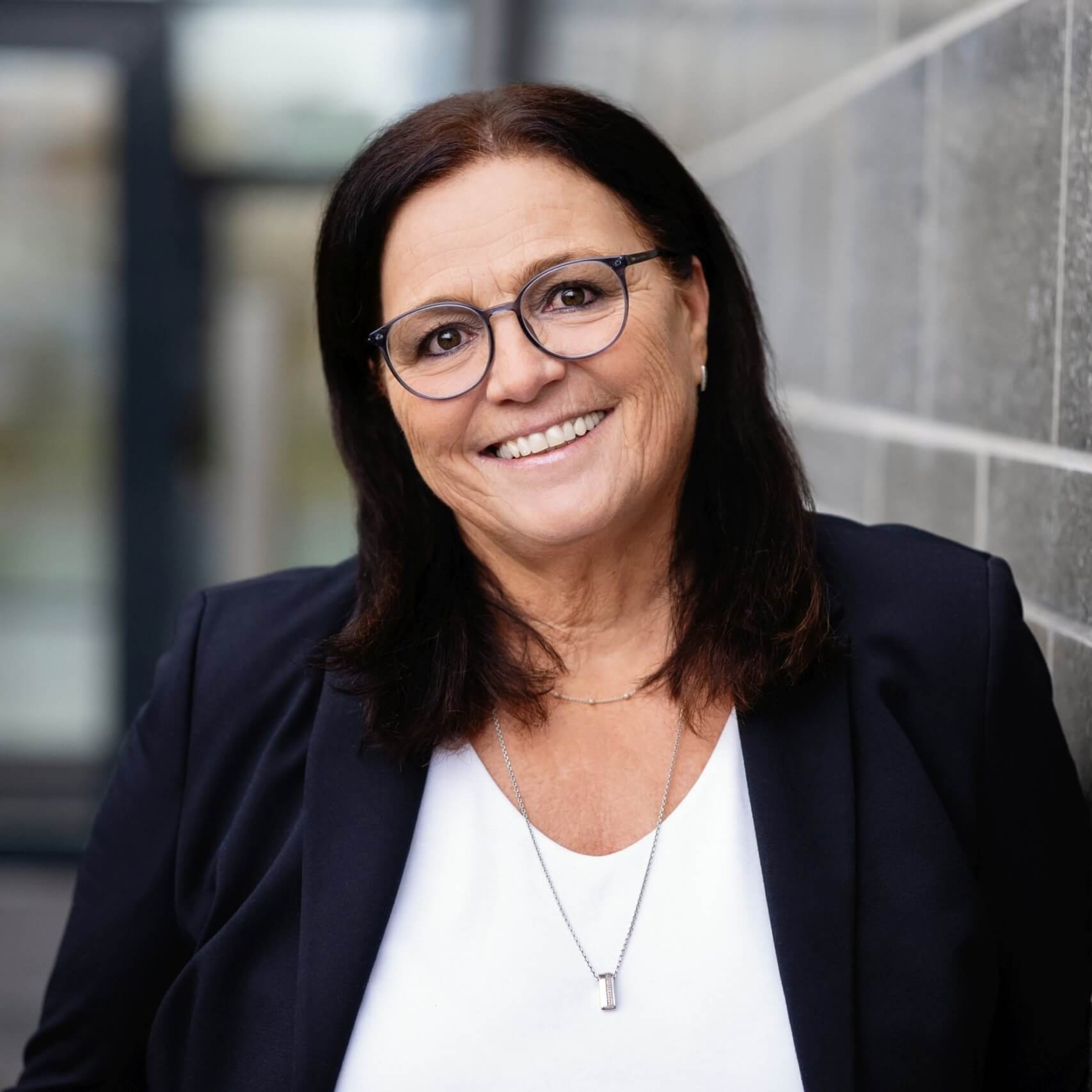
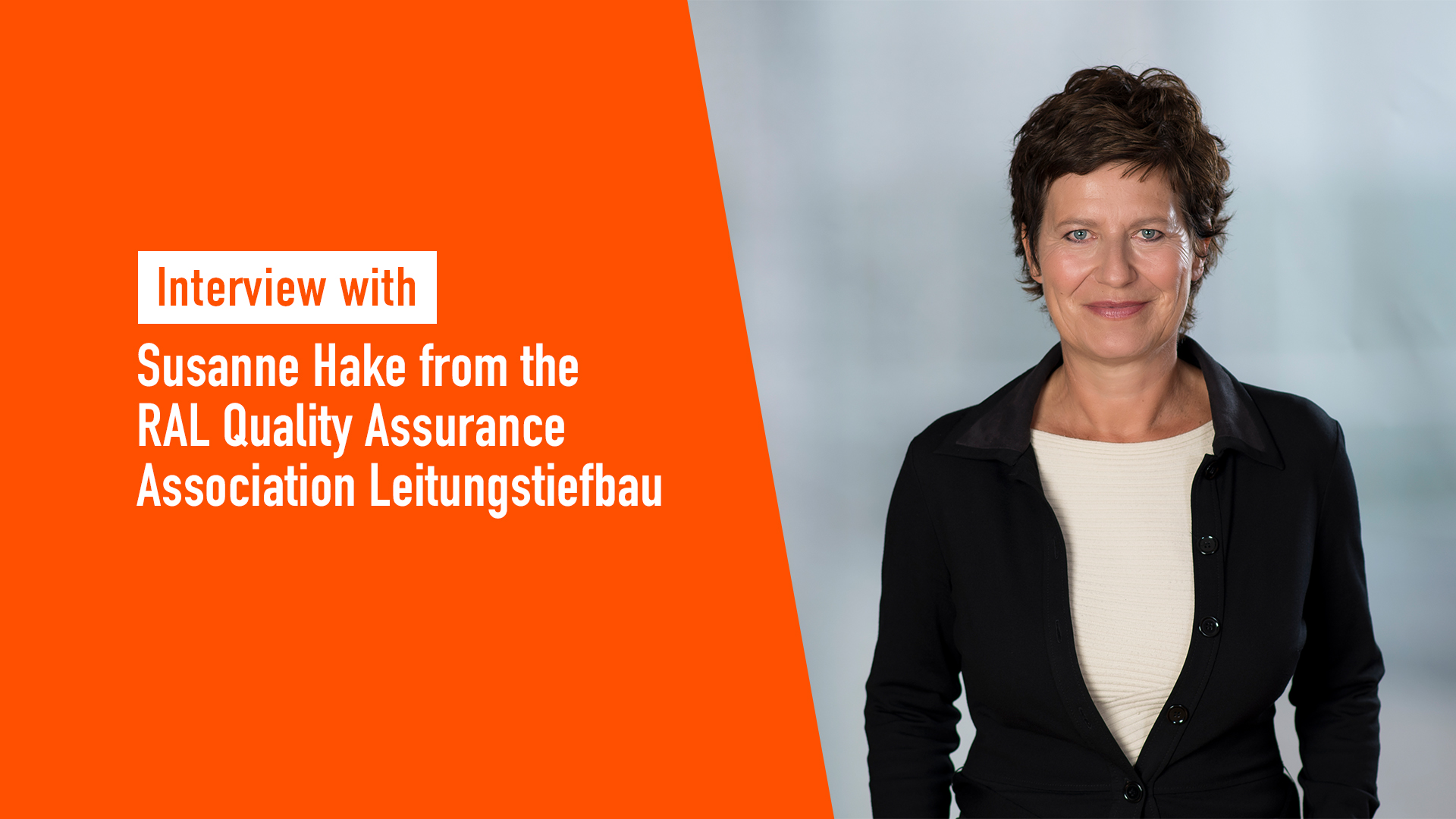
5 questions for Susanne Hake from the Quality Assurance Association Leitungstiefbau
1. 40 years of the RAL Quality Assurance Leitungstiefbau – what has truly driven you, and what has truly driven the association, over this period?
Looking back over 40 years of the RAL Quality Assurance Association Leitungstiefbau, it is very clear that this development has by no means always followed a straight path. There have been important technical milestones and periods of growth, but also a time when the future of the Quality Assurance Association was genuinely at stake. The situation around the turn of the millennium was particularly significant. Investment in the cable sector had stagnated; many companies were struggling through difficult economic times; members were leaving the Quality Assurance Association; and, as a result, its financial base was becoming increasingly narrow. At the 2001 AGM in Hamburg, only 76 companies remained members of the Quality Assurance Association. Yet the member companies did not give up; instead, they voted in favour of a restart. I still find this response remarkable to this day. We deliberately raised our quality standards. Audits were restructured and checklists developed. In addition, training courses and seminars were introduced to provide companies with practical support.
When I took over as management in 2002, the aim was to continue along this path consistently whilst also involving clients more closely. After all, quality only works if it is not merely practised by the contractors, but is also specified in tenders and demanded. Today, we face even more demanding, socially defined challenges – from broadband roll-out and the energy and heating transition to charging infrastructure. Furthermore, we must continually emphasise to political decision-makers that quality is the crucial foundation for construction that meets the needs of future generations.
2. In practical terms, what specific benefits do RAL Quality Marks offer to both contractors and clients?
For a company, the RAL Quality Marks first and foremost demonstrate to the market that its quality standards are underpinned by a verifiable system. It is not simply a logo or a certificate on the wall, but rather defined quality assurance and test specifications, self-monitoring and traceable requirements for implementation.
For clients, too, the RAL Quality Mark thus provides, above all, transparency and reliability. They can rely on an established quality system when issuing tenders and awarding contracts. One example is the requirements set out in VDE-AR-N 4220 or the corresponding regulations in other sectors. These requirements are taken into account in our quality assurance specifications.
3. The demands placed on underground utility installation have been increasing for years – how do you deal with these challenges?
We are currently facing a convergence of challenges that is extremely demanding for our sector. The roll-out of gigabit and fibre-optic networks, the energy transition, district heating networks, charging infrastructure and the modernisation of existing networks are all taking place simultaneously. Furthermore, projects are expected to be implemented more quickly, whilst requirements regarding health and safety, documentation and construction quality are increasing.
For us, this means, first and foremost, continuously refining our quality assurance and test specifications. These must incorporate new technical processes and changing framework conditions without compromising our quality standards. The experience of our member companies has, in fact, been feeding into technical regulations for decades. Requirements from our quality assurance and test specifications have repeatedly found their way into overarching regulations. A good example is trenching, milling and ploughing methods, which have become increasingly important, particularly with the roll-out of broadband. The RAL Quality Assurance Association Leitungstiefbau has therefore also contributed its practical experience to the development of DIN 18220, known as ‘DIN Trenching’. This commitment exemplifies our role as a driving force behind standards. Our task is not only to incorporate existing standards into our Quality Assurance processes, but also to identify technical developments at an early stage and play an active role in shaping them.
4. Standards, regulations, committee work – what makes this work so exciting?
What I find particularly exciting is the link between practical experience and the development of technical standards. The work carried out by these committees aims to incorporate practical experience into a set of regulations that will subsequently create tangible added value for clients, designers and contractors alike. This is because good regulations define common standards, reduce scope for interpretation and ensure that new methods are implemented on a sound technical basis. That is why the RAL Quality Assurance Association Leitungstiefbau has been actively involved for decades. To give just a few examples: self-monitoring, as a crucial element of our quality assurance, was incorporated into ZTV-A 89; later, experts from our Quality Assurance Association contributed to, amongst others, GW 381, FW 600 and VDE 4220. With the ATV DIN 18322, underground cable installation was provided with its own technical contractual basis for the first time.
5. What does the future hold for underground utility installation, and what does the sector need right now?
The importance of underground utility works will continue to grow. Fibre-optic and gigabit networks, electricity and heating networks, charging infrastructure and the modernisation of existing networks must all be advanced in parallel over the coming years. This requires substantial investment, a sufficient supply of qualified specialists and quality standards that keep pace with new processes and digital opportunities.
Equally important to us are reliable political framework conditions and clear priorities. Companies need to know which infrastructure projects are due and when, and under what conditions they are to be implemented. Only then can they invest proactively in staff, training, machinery and digitalisation, and build up their capacities accordingly.
A very specific example is the operator register, which we have been calling for for a long time. We are building the infrastructure for digitalisation, but at the same time we are working in an underground construction environment for which there is still not enough transparent and reliable information available everywhere. When a company carries out groundworks, it must be able to ascertain as fully as possible which cables and pipes lie there and who is responsible for them. Missing or incomplete information increases risks to workers, construction processes and costs. That is why operator registers, digital utility documentation and, looking ahead, Building Information Modelling (BIM) must be integrated more closely.
All in all, for the RAL Quality Assurance Association Leitungstiefbau, the future means not only ensuring quality but also actively helping to shape the framework conditions for good underground utility installation. We must play an active role precisely where the course for the sector is set – in standardisation and regulation, in dialogue with clients, and in discussions with politicians and public authorities.
More information: RAL Quality Assurance Association Leitungstiefbau
Thank you very much, Susanne Hake!